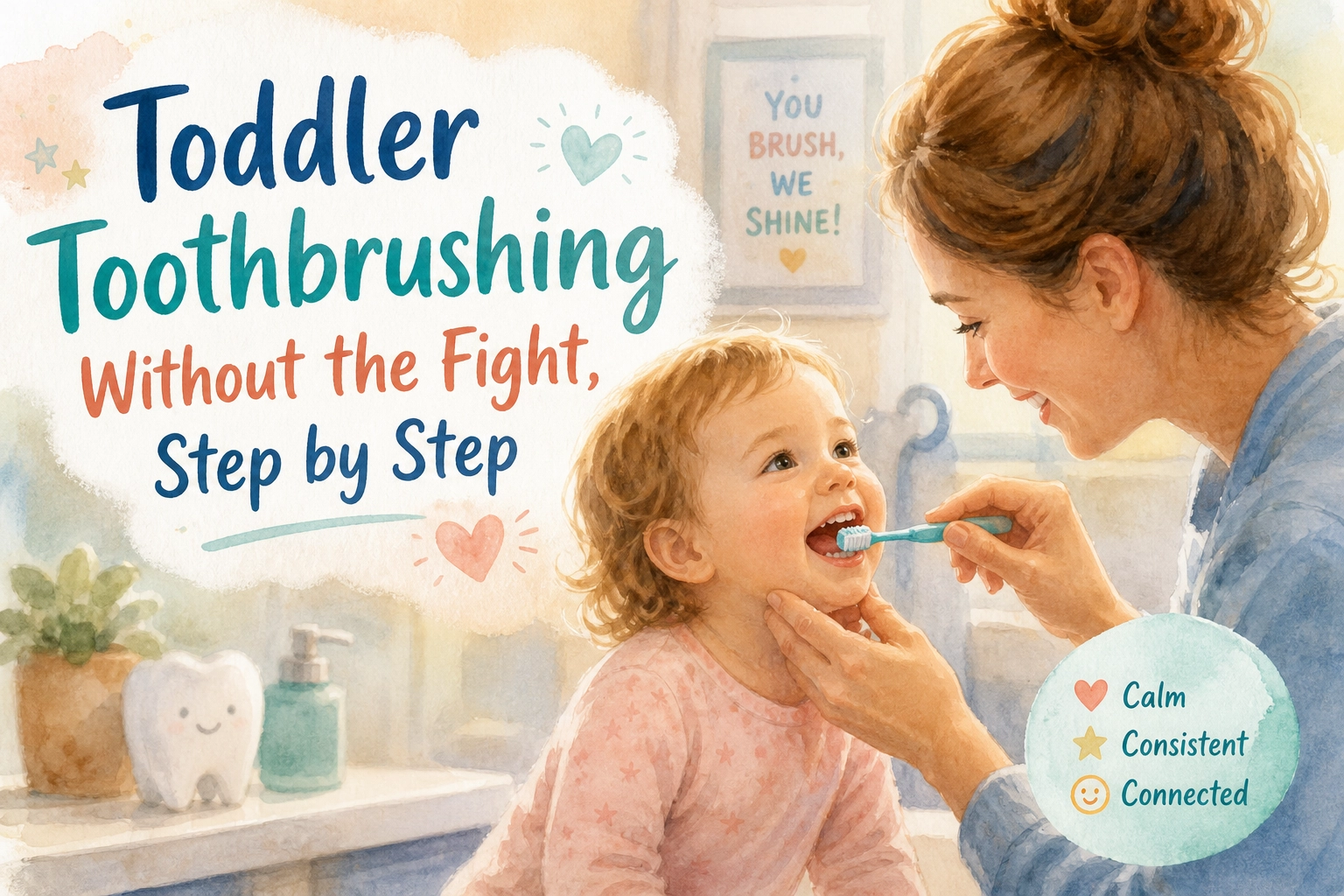
If you have ever found yourself pinning a wriggling toddler to the bathroom floor just to get a toothbrush near their mouth, take a breath. You are not failing, and your child is not being difficult on purpose. For a one- to three-year-old, toothbrushing is a control and sensory problem, not a discipline problem. That shift in perspective is exactly what this post is built on.
In the sections ahead, we are going to walk through a real script for brushing your toddler's baby teeth without the daily battle. You will learn the two-adult hold and the parent-leg hold, the exact order to brush in, when to hand the brush over and when to take it back, and what to do when your toddler clamps their mouth shut. We will also cover the mistakes that make the fight worse, what the routine does and does not fix, and how to know when to ask for help.
The goal here is simple: a predictable routine, a steady position, and a genuinely clean mouth in about two minutes. Let's get started.
Why Toddler Brushing Turns Into a Fight
At 12 to 36 months, resistance is control and sensory, not discipline: a toddler testing autonomy meets a brand-new mouth sensation.
Soften sensory triggers: toothpaste flavor, a brush that feels rough, or a hand near the jaw. Use a softer brush, less toothpaste, and a supported hold, not a gripping hand.
Control triggers: tipped back without warning, no countdown, no job. Say the sequence ("top right, top left, then your turn"); predictability is key.
Solo brushing backfires: a toddler's hands cannot yet copy your brushing motion, so a brush on their own mostly gets chewed. Assisted brushing is normal.
The AAPD calls early childhood caries a chronic, preventable, multifactorial disease (source). 2013-2018 data show severe early childhood caries rose among US preschoolers overall, and decay remains common in poor and near-poor children. Brushing is one lever, not the whole plan. Sensory differences? See calm visits for autistic kids.
Set Up the Two Minutes Before You Start
Before you sit down, gather the setup: a soft brush with a small toddler-sized head, fluoride toothpaste in the right amount for your child's age, a two-minute timer or song, and decent overhead light. If a second adult is home, bring them in.
Start the clock when the brush touches teeth, not while you negotiate. Let your toddler press the timer button so the two minutes belong to them.
Lock the time and place: morning after breakfast and night before bed, same bathroom, same order of events. Same sequence does more than persuasion. If your child hasn't had one, schedule a first dental visit by age one.
Give hands a job: holding the toothpaste cap, the timer, or resting on their knees. Idle hands grab the brush. Keep choices small, and offer a choice about which brush rather than whether to brush at all. Have a spare brush and towel within reach. Never leave a toddler alone holding a brush while you hunt for a replacement.
Assisted Brushing Holds: Why Position Comes First
Once the timer is running, position decides everything. A supported head steadies the mouth so you can see where the brush is going. Both holds below cradle the head without forcing it. Keep the hold gentle: no arm pinning, no nose holding, no prying the jaw, since those escalate a child and make tomorrow harder. Think of this as practice guidance, not a study-backed rule: pediatric offices teach positioning like this, and your dentist or hygienist can demonstrate the version that fits your child at a first dental visit. If your child gags, coughs, or can't breathe easily through the nose, stop and reset calmly in the same room.
The Two-Adult Hold
With a cradled head, try the sequence this practice teaches families:
Adult A sits back-supported, child on lap facing A, legs around A's waist. A hugs the torso loosely, child upright, head resting against A's chest.
Adult B kneels behind, cradles the skull with one open palm (support, never push backward) and brushes with the other hand.
Tilt the head slightly toward B so upper front teeth face B and the brush enters from above; the angle along with the support gives B a clear view of the upper back teeth.
Choose one talker: one calm voice narrating the steps, with the second adult staying quiet, keeps things calmer than two people coaching.
If the jaw clamps, keep support, do not pry, count slowly out loud, then try the corner of the mouth. Gentle waiting tends to open a jaw better than force.
A cut lip? Our kids' dental emergency guide covers first aid.
The Parent-Leg Hold for One Adult
Flying solo? Try the parent-leg hold. Sit on floor, back against wall or tub, legs out. Lay child on back along your legs, head in your lap, face up. Tuck arms gently under loosely crossed calves, hands at their sides. That contact is a resting place, not a restraint, and keeps fingers off the brush. Cradle the crown with non-dominant hand, thumb light on one cheek. This steadies the head and keeps the mouth open toward the ceiling, so upper teeth are easiest to see. Brush from above with dominant hand; the top front gumline is clear, where early decay often shows first. If they arch or twist, sit them up for a ten-second reset in the same room, then lie them back down and continue. Never keep brushing a child who is upside down and coughing. This sequence is the version this practice teaches families. If a new tooth seems to drive resistance, check these teething signs and timeline.
The Brushing Order for Baby Teeth
Once settled, run this order nightly. Start with the outside surfaces and work through the mouth in the same sequence every night. Predictability helps; a fixed order stops you skipping the same zone. Next: molar chewing surfaces, then inside surfaces along the tongue side. Save upper front teeth outside for last, so you reach them while the timer runs.
Angle bristles toward the gumline and use small circles or short sweeps. Hard scrubbing cleans no better and gives toddlers a reason to clamp. For the backs of the top front teeth, turn the brush vertical or use the tip, tilt the head back slightly, and sweep down. A missed zone matters more on baby teeth than you might expect, since they have to last until the permanent teeth arrive. Watch the gumline: any change in the color of a tooth near the gum on a top front tooth is worth photographing and mentioning next visit.
When to Hand the Brush Over and When to Take It Back
Once the order is automatic, lock the handover: your child's turn comes only after your adult pass. A toddler's turn mostly cleans visible front teeth; treat it as cooldown and habit builder, never main event. If your child insists on first, allow a short practice turn with your hand on theirs, then take brush back to finish. A fixed split helps children see the shape of the two minutes: your pass first, then their turn. Nightly words: "My turn first, then your turn." Take the brush back calmly, without apologizing or bargaining; negotiating hands your toddler controls. If child is also working on giving up a pacifier, same calm, predictable language helps. Let your child hand the brush back and press the timer to stop it; a closing ritual turns two minutes of cooperation into an expected routine. Do the handover seated and inside the hold, never while your child walks around the house; a toddler running with a toothbrush is a choking and fall risk, not independence. Ratio shifts once child reliably spits and reaches every surface, usually closer to school age. At checkup, ask dentist when ready for less hands-on help.
The Two-Minute Script, Minute by Minute
Here is where the adult's pass goes.
Zero to ten seconds: Child in the hold, timer pressed, one sentence of narration. "Top right first, then top left." No debate, no warm-up questions.
Ten to forty-five seconds: Upper right outside surfaces along the gumline, then that quadrant's chewing surfaces. Move the head with your cradling palm rather than asking the child to turn.
Forty-five seconds to one minute twenty: Upper left outside and chewing surfaces, head tilted slightly toward your brushing hand. If the child clamps, pause and reset before coming back in.
One minute twenty to one minute fifty: Lower right, then lower left, outside, chewing, and inside along the tongue side. Watch the timer here, not the child's mood; this is the block parents rush.
One minute fifty to two minutes: Backs of the upper front teeth with the brush tip, sweep down, then the outside of the top front teeth. Say "last one" and mean it, then stop the timer. At about one minute thirty, hand the brush over for your child's turn, and let your child press the timer to stop it. A calm adult beverage or a wipedown can wait until after the timer if you do not use a child's turn.
When the Mouth Clamps Shut: Fixes That Work
Some sessions hit a wall: respond without battle.
Jaw clamped shut. Don't pry. Support head, say next step aloud, wait five to ten seconds, then slide brush in at mouth corner where back teeth part slightly. Toddler can't clamp forever; waiting beats pushing.
If your child bites the brush, hold still rather than yanking sideways. Rotate a quarter turn to break the grip, model a "big lion mouth," then re-enter.
If your child gags, use a smaller brush head and less toothpaste, stay short of the point that triggers it, tip the chin slightly down, and brush from the side.
If your child arches or screams, sit your child up for a ten-second reset in the same bathroom, then resume and finish.
Mouth shut for hidden reasons. Check sore spot, new tooth, bitten cheek, or fever before blaming technique. If urgent, see urgent dental care. Otherwise gently wipe for a day and mention at next visit.
Mistakes That Make the Fight Worse
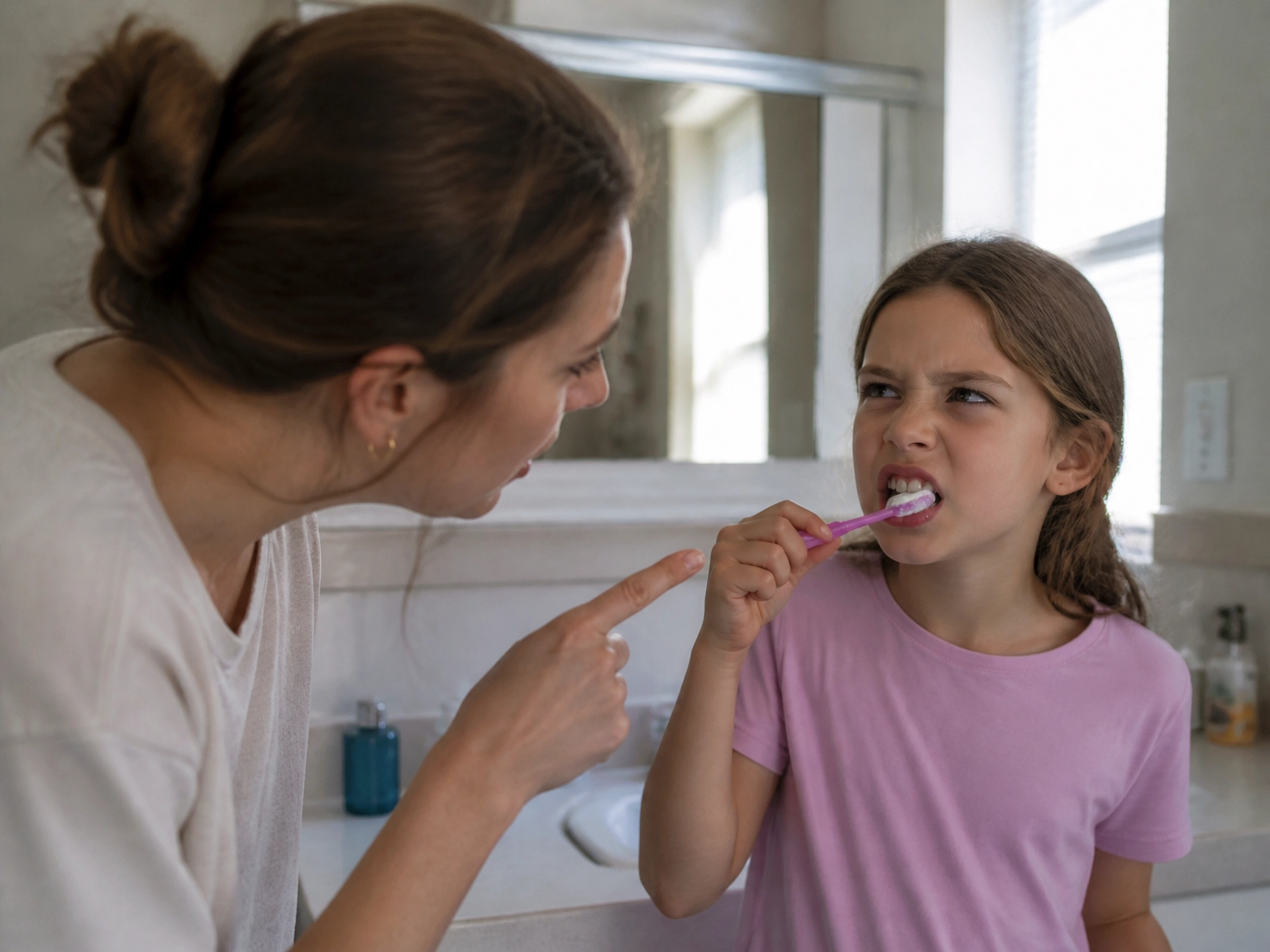
Once the mouth opens and the two minutes finish, check that you are not undoing the routine with these common moves. Skip the "Are you ready?" question; it invites a no and turns brushing into a request. Announce the next step instead. Don't brush only what you can see. The back teeth are the easiest zone to skip, and the outside of the top front teeth is easy to reach but not a shortcut. Hand the brush over only during the seated handover, never for a toddler to wander with it. Use a toddler-sized brush head and a small smear of fluoride toothpaste, since an adult head or a heap can trigger gagging. Keep the routine identical on tired nights, because a skipped night makes brushing optional. Finally, repeated juice or milk sipping is a separate sugar-exposure lever; the brush does not cancel it out. See more toddler routines on our practice blog.
What Two Minutes of Brushing Alone Will Not Fix
Even a perfect two minutes has limits. Keep these alongside the routine:
Flossing where baby teeth touch. Ask your dentist when to start flossing and which gaps matter most.
Sugar frequency, not just volume. How often sugar reaches the teeth matters, not only how much arrives in one sitting, so steady sipping through the day counts too.
Fluoride, confirmed rather than assumed. Ask your dentist the right toothpaste amount for your child’s age and whether they need anything beyond it.
Checkups on schedule. AAPD periodicity guidance sets age bands at 6 to 12 months, 12 to 24 months, and 24 months to 6 years. That is why the first visit is timed to the first tooth or first birthday, not to a problem.
The bigger picture. Early childhood caries is multifactorial: developmental, biological, and behavioral, with household economics weighing heavily. Brushing is one strong daily habit, not a guarantee on its own.
If Two Weeks of the Routine Still Is Not Working
Watch for signs the routine needs more than two minutes. Book a visit rather than pushing harder if you see chalky white bands or brown spots near the gumline of the top front teeth, gums that bleed, a child who avoids chewing, or a mouth that feels sore to touch.
A first visit also demonstrates the holds. Watching a pediatric team position a child is easier to copy than any written description. In Delaware, First Smile Pediatric Dentistry is a Delaware-based practice led by board-certified pediatric dentist Dr. Morgan Morrow, and it accepts most insurance plans and offers flexible payment options. Prepare like brushing: same time of day, a fed and rested child, one calm adult talking. Do not wait for pain. Early childhood caries is treated as a chronic disease of childhood, with consequences including pain, infection, eating and speech difficulties, and enamel defects (source), all easier to prevent than treat.
What to Remember Tomorrow Morning
Tomorrow morning, skip the negotiation and start the routine. Resistance is about control and sensation, not defiance, so solve for position and predictability. Use the two-adult hold or parent-leg hold to keep the head steady and safe, reaching the molars and backs of top front teeth in about two minutes. Brush in the same order every time: outside surfaces by quadrant, chewing surfaces, inside surfaces, upper front teeth last. Do your pass first, hand the brush over for your toddler's turn, and let your toddler stop the timer. If the mouth clamps, support the head, count five to ten seconds, come in from the corner, and reset instead of quitting. Finish the two minutes. Pair brushing with flossing where teeth touch, fewer sugar exposures, fluoride confirmed by your dentist, and checkups on AAPD age bands. The brush is the daily habit that holds the rest together.
Conclusion
Toddler toothbrushing gets easier when you stop treating resistance as defiance and start solving for position, predictability, and a calm adult. First Smile Pediatric Dentistry can help if the routine is still not working after a couple of weeks. Start tomorrow morning with the same calm setup and same brushing order. Consistency is what turns two minutes into a habit that protects your toddler's smile.